Dubai, UAE +971 56 774 1007 WhatsApp
Home About
All Services ACL Surgery PCL Surgery Knee Arthroscopy Shoulder Arthroscopy Ankle Arthroscopy Elbow Arthroscopy Hip Arthroscopy Wrist Arthroscopy ACL Tear Treatment Rotator Cuff Tear Meniscus Transplant
Media
Picture Gallery Testimonials Contact 📅 Book Appointment
03
Arthroscopic Surgery · Dubai

Shoulder Arthroscopy

Minimally invasive keyhole surgery for shoulder injuries — performed by British-trained orthopaedic surgeon Dr. Mohammad Ashfaq Konchwalla at Medcare Hospital, Dubai.

Rotator Cuff Repair SLAP Lesion Shoulder Instability Frozen Shoulder Impingement Syndrome Same-Day Discharge
25+
Years Experience
1–2
Hour Procedure
48h
Appointment Wait
FRCS
Royal College Certified
What is Shoulder Arthroscopy?

Keyhole Surgery for the Shoulder Joint

Shoulder arthroscopy is a minimally invasive orthopaedic surgery that uses a tiny high-definition camera — an arthroscope — and precision miniature instruments inserted through small incisions of just 5 to 10 mm around the shoulder joint. This advanced innovative arthroscopy technique allows Dr. Konchwalla to visualise the interior of the shoulder with exceptional clarity, diagnose problems with accuracy that even MRI cannot always match, and treat a wide range of shoulder conditions — all without the need for a large open incision.

The shoulder is the most mobile and complex joint in the body. It is stabilised by a combination of muscles, tendons (the rotator cuff), ligaments, and a ring of cartilage called the labrum. When any of these structures are injured — whether from sport, overuse, trauma, or degeneration — the result is pain, instability, loss of strength, and restricted range of motion that can dramatically affect quality of life. As a sports medicine specialist Dubai, Dr. Konchwalla understands how sports injury treatment in Dubai requires precise diagnosis and targeted intervention.

"Shoulder arthroscopy allows me to visualise and treat the full complexity of the shoulder joint — with a precision that open surgery simply cannot match."
— Dr. Mohammad Ashfaq Konchwalla, FRCS

Compared to traditional open shoulder surgery in Dubai, arthroscopy preserves the surrounding healthy tissue, significantly reduces post-operative pain and scarring, and allows patients to return to sport and daily activity much sooner. Most procedures are performed as day surgery, with the majority of patients discharged the same day. Dr. Mohammad Ashfaq Konchwalla's 25+ years of specialist experience and his FRCS qualifications ensure every patient receives care that meets the very highest British-trained orthopaedic & sport surgeon standards. As the best Dubai sports surgeon, he combines cutting-edge technique with compassionate patient care.

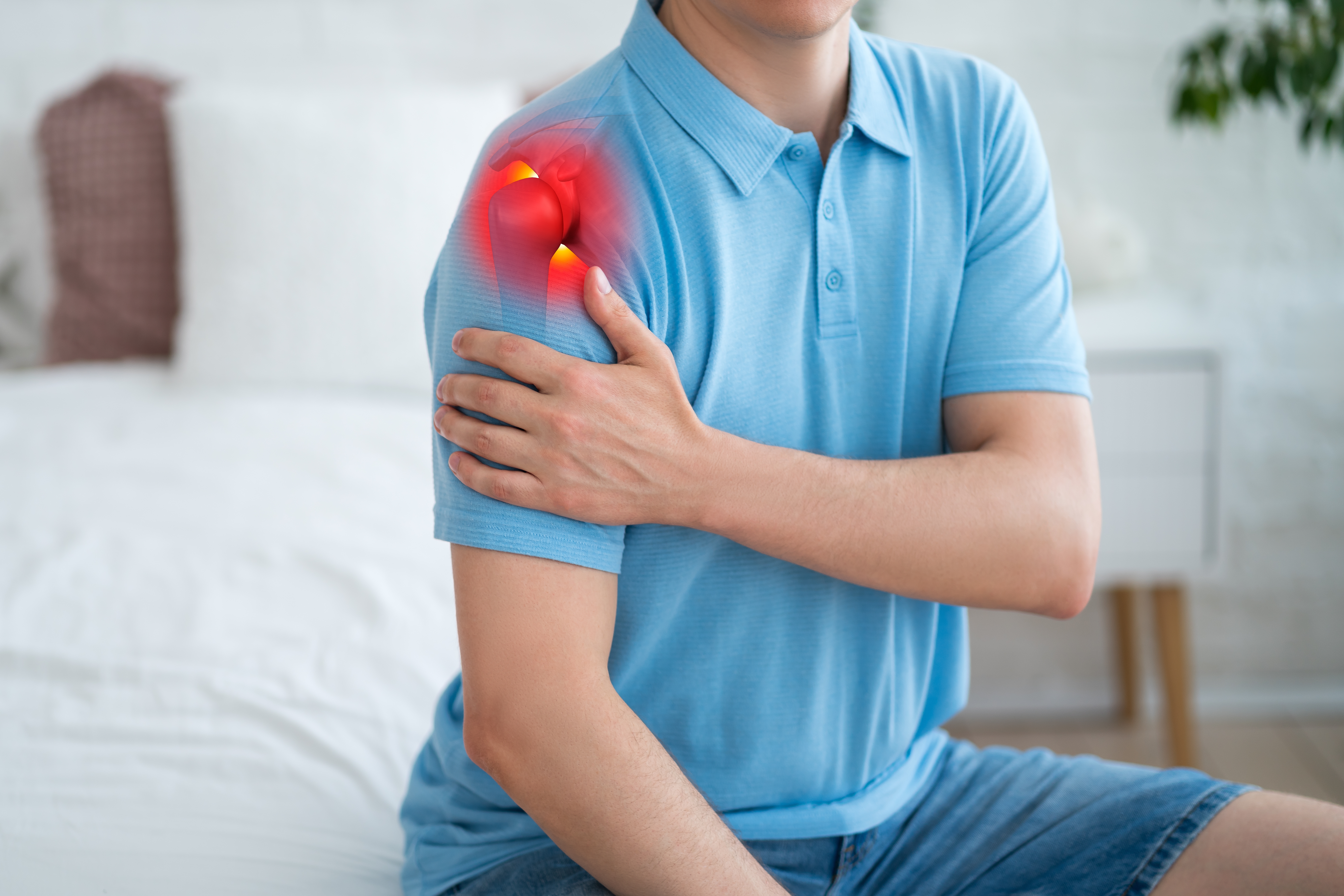
Shoulder Arthroscopy Dubai — Dr. Konchwalla
Procedure Type
Arthroscopic (Keyhole)
2–3 incisions of 5–10 mm around the shoulder joint.
Duration
1 – 2 Hours
Depending on repair type (decompression vs. full rotator cuff repair).
Anaesthesia
General or Regional
Interscalene nerve block provides 12–18hr post-op pain control.
Hospital Stay
Day Case or 24-Hour
Most patients go home the same day.
Post-Op Sling
2 – 4 Weeks
Duration varies by surgery type to protect the repair.
Location
Medcare Hospital, Dubai
22A Street, From Sheikh Zayed Road, 2nd Interchange.
Consultant Surgeon
Dr. Mohammad Ashfaq Konchwalla
FRCS (Eng) · FRCS (Glas) · FRCS (Tr & Ortho) — trained at King's College London
Location
Medcare Hospital Dubai
22A Street, from Sheikh Zayed Road, 2nd Interchange, Dubai UAE
Book a Consultation
Appointments typically available within 48 hours
Shoulder Anatomy

Understanding Your Shoulder

The shoulder is the most complex joint in the human body. Understanding its anatomy helps explain why precise arthroscopic technique — rather than broad open surgery — produces the best results. As a consultant orthopaedic surgeon Dubai, Dr. Konchwalla uses this knowledge to deliver innovative arthroscopy in Dubai.

The supraspinatus, infraspinatus, subscapularis, and teres minor tendons form the rotator cuff — the primary stabiliser and power generator of the shoulder. Tears are the most common surgically treated shoulder condition.
A ring of fibrocartilage that deepens the shallow shoulder socket, significantly increasing joint stability. Tears (Bankart lesions, SLAP tears) are a primary cause of shoulder instability and are repaired arthroscopically with suture anchors.
The narrow passage between the rotator cuff and the acromion bone. When this space is compromised by bone spurs or bursal inflammation, impingement syndrome develops. Arthroscopic decompression restores normal space and relieves pain.
The joint capsule and its associated ligaments maintain shoulder stability through the full range of motion. Capsular contracture causes frozen shoulder; ligament laxity leads to instability — both addressed arthroscopically by Dr. Konchwalla.
Benefits

Why Choose Arthroscopic Shoulder Surgery?

2–3 incisions of just 5–10 mm replace the large cuts required in open shoulder surgery, meaning less damage to healthy muscle and significantly less visible scarring.
Arthroscopic shoulder procedures typically allow return to light activities 2–4 weeks sooner than equivalent open surgery. For athletes, this difference is career-defining.
Most shoulder arthroscopy procedures are performed as day surgery — avoiding extended hospitalisation and allowing recovery in the comfort of your own home.
Modern arthroscopes provide magnified, high-definition images of the joint interior — often revealing pathology invisible on MRI and enabling more complete and precise surgical treatment.
Smaller incisions mean substantially lower infection risk, reduced blood loss, and a lower overall complication rate — making arthroscopy one of the safest orthopaedic procedures available.
If additional pathology is discovered during surgery, Dr. Konchwalla can address it in the same session — avoiding the need for a second operation and the associated recovery time.
Conditions Treated

What Can Shoulder Arthroscopy Treat?

Dr. Konchwalla uses shoulder arthroscopy in Dubai to treat a comprehensive range of shoulder pathologies — from acute sporting injuries to long-standing degenerative conditions. As a shoulder arthroscopy specialist in Dubai, he provides expert diagnosis and arthroscopic shoulder surgery Dubai solutions. Select a condition below to learn more.

Rotator Cuff Tears

The rotator cuff is a group of four muscles and their tendons that stabilise the shoulder and power arm movement. Tears — whether from acute injury or gradual degeneration — cause deep shoulder pain, weakness, and difficulty lifting the arm. Dr. Konchwalla performs arthroscopic rotator cuff repair using suture anchors to reattach the torn tendon to bone, restoring strength and eliminating pain. This is a leading rotator cuff tear treatment in Dubai and rotator cuff repair treatment in Dubai. Partial tears may be treated with debridement, while full-thickness tears require formal repair.
At a Glance
Cause
Acute injury or gradual degeneration
Symptoms
Deep pain, weakness, difficulty lifting arm
Treatment
Arthroscopic repair with suture anchors
Return to sport
3–6 months

Shoulder Instability & Dislocation

Recurrent shoulder dislocation — where the ball of the joint repeatedly slips out of the socket — is often caused by damage to the labrum and the anterior glenohumeral ligaments. The Bankart lesion is the most common finding. Dr. Konchwalla performs arthroscopic Bankart repair using suture anchors, reattaching the torn labrum and tightening the stretched capsule to restore lasting shoulder stability. As a specialist in shoulder dislocation surgery Dubai, he provides excellent outcomes particularly for young athletes in contact sports.
At a Glance
Cause
Labral & ligament damage from dislocation
Common in
Young athletes, contact sports
Procedure
Arthroscopic Bankart repair
Return to sport
4–6 months

SLAP Lesions (Labral Tears)

A SLAP (Superior Labrum Anterior to Posterior) tear involves the cartilage ring at the top of the shoulder socket, where the biceps tendon attaches. Common in overhead athletes — cricketers, swimmers, tennis players, and throwers — SLAP lesions cause deep shoulder pain, clicking, and reduced performance. Dr. Konchwalla repairs SLAP tears arthroscopically using suture anchors, restoring labral integrity and biceps anchor stability with excellent outcomes for overhead sport return.
At a Glance
Location
Superior labrum (biceps anchor)
Common in
Cricketers, swimmers, tennis players
Treatment
Arthroscopic SLAP repair with suture anchors
Return to sport
4–6 months

Shoulder Impingement Syndrome

Impingement occurs when the rotator cuff tendons become compressed and irritated as they pass through the subacromial space beneath the acromion bone. This causes pain with overhead activity and lying on the shoulder. When conservative treatment with physiotherapy and injections fails, arthroscopic subacromial decompression (acromioplasty) removes the offending bone spur and inflamed bursal tissue, providing lasting relief with a very short recovery period.
At a Glance
Cause
Bone spurs compressing rotator cuff
Symptoms
Pain with overhead activity & lying on shoulder
Treatment
Arthroscopic subacromial decompression
Return to sport
6–8 weeks

Frozen Shoulder (Adhesive Capsulitis)

Frozen shoulder develops when the joint capsule thickens, contracts, and becomes severely inflamed — causing progressive loss of movement and significant pain. For patients who have not responded to physiotherapy, steroid injections, or hydrodilatation, arthroscopic capsular release is a highly effective solution. Dr. Konchwalla provides expert frozen shoulder treatment Dubai, releasing the contracted capsule arthroscopically, immediately restoring range of motion that patients often have not had for months or years.
At a Glance
Cause
Capsular thickening & contracture
Symptoms
Progressive loss of movement, significant pain
Treatment
Arthroscopic capsular release
Recovery
Immediate ROM improvement; 6–12 weeks rehab

AC Joint Problems & Loose Bodies

Acromioclavicular (AC) joint arthritis, osteolysis of the distal clavicle, and loose bone or cartilage fragments within the shoulder joint all cause pain, grinding, and restricted movement. Arthroscopic excision of the distal clavicle and removal of loose bodies eliminates these mechanical problems cleanly and precisely — with minimal disruption to the surrounding anatomy and a rapid return to full function.
At a Glance
Conditions
AC arthritis, clavicle osteolysis, loose bodies
Symptoms
Pain, grinding, restricted movement
Treatment
Arthroscopic excision & debridement
Recovery
4–8 weeks
The Procedure

How Shoulder Arthroscopy Works

From your initial consultation to your return to sport, Dr. Konchwalla guides every patient through a transparent, evidence-based surgical pathway designed around your specific injury, lifestyle, and goals. As the best orthopedic sport doctor in the region, he delivers minimally invasive orthopaedic surgery Dubai with exceptional precision. Click any step to expand details.

01

Pre-Surgical Assessment

Before Surgery

MRI scans, clinical examination, and a detailed history confirm the exact pathology. Dr. Konchwalla explains all findings, discusses options, and ensures informed consent before any procedure is planned.

MRI ScanClinical ExamPatient Consent
Location
Medcare Hospital
Duration
45–60 min
Imaging
MRI + X-Ray
02

Anaesthesia

Day of Surgery

General anaesthesia combined with a regional interscalene nerve block is commonly used — eliminating pain during surgery and providing excellent post-operative comfort for the first 12–18 hours.

General AnaesthesiaInterscalene Block12–18hr Pain Cover
Type
General + Regional
Pain Block
Interscalene Nerve
Coverage
12–18 hours
03

Arthroscopic Surgery

Core Procedure

2–3 small incisions (5–10 mm) are made around the shoulder. The arthroscope delivers HD visualisation inside the joint. Suture anchors, shavers, and specialised instruments repair, reconstruct, or decompress as required.

5–10 mm IncisionsHD ArthroscopePrecision Instruments
Incision Size
5–10 mm
Visualisation
HD Arthroscope
Duration
1–2 hours
04

Closure & Sling

Post-Op

Incisions are closed with fine sutures. The arm is placed in a protective sling. The procedure typically takes 1–2 hours from incision to closure depending on complexity.

Fine SuturesProtective Sling1–2hr Total
Closure
Fine Sutures
Support
Shoulder Sling
Total Time
1–2 hours
05

Recovery & Discharge

Same Day

Patients recover in the ward before same-day or next-day discharge. Written aftercare instructions, pain management guidance, and physiotherapy arrangements are all provided before leaving hospital.

Ward RecoveryWritten AftercarePhysio Referral
Stay
Day Case / 24hr
Support
Sling + Aftercare
Follow-up
Within 2 weeks
1–2hr
Procedure
5–10mm
Incision Size
Same Day
Discharge
3–6 Mo
Return to Sport
Book Consultation
Recovery

Your Shoulder Recovery Timeline

Shoulder arthroscopy recovery timelines vary significantly depending on the procedure performed. Dr. Konchwalla provides every patient with a personalised rehabilitation programme, working closely with physiotherapists to optimise outcomes at every stage of recovery. As a sports surgeon in Dubai, he ensures athletes and active patients receive sport-specific rehabilitation guidance.

3–6
Months to Sport
Days 1–5
01

Sling, Rest & Pain Management

Arm rested in a sling. Nerve block provides excellent early pain control. Ice and prescribed pain relief manage any discomfort. Pendulum exercises begin.
Weeks 1–2
02

Early Physiotherapy & Gentle Movement

Physiotherapy begins with passive range-of-motion exercises. Pain and swelling significantly reduce. Light daily activities performed with the non-operated arm.
Weeks 2–6
03

Progressive Mobility & Sling Removal

Sling is typically discontinued at 4 weeks. Active-assisted and active range-of-motion exercises progress. Return to desk work and light daily activities.
Weeks 6–12
04

Strengthening Phase

Rotator cuff and scapular stabiliser strengthening begins. Driving usually permitted from 6 weeks. Light gym activities under physiotherapy guidance.
3–6 Months
05

Return to Sport

Sport-specific conditioning and return-to-sport testing. Clearance for contact sport and overhead activity based on functional milestones — not simply time elapsed.
Your Surgeon
Why Dr. Konchwalla?

British-trained. FRCS-certified. Trusted by professional athletes across Dubai and the UAE.

Qualifications
FRCS (Eng) · FRCS (Glas) · FRCS (Tr & Ortho)
Trained at King's College London and leading UK surgical centres.
Shoulder Surgery Experience
25+ years performing arthroscopic shoulder surgery — rotator cuff repairs, labral reconstructions, instability procedures, and decompression.
Athlete Expertise
Go-to shoulder surgeon for cricketers, swimmers, footballers, rugby players, and tennis players throughout the UAE and the wider region.
Conservative First Approach
Dr. Konchwalla always explores physiotherapy, injection therapy, and non-surgical management before recommending surgery.
Personalised Rehabilitation
Custom rehab programmes built around your sport, your goals, and your timeline — not a generic protocol.
Sports & Shoulder Injuries

Shoulder Arthroscopy for Athletes

Overhead sport, contact sport, and high-impact activity all place enormous demands on the shoulder joint. Dr. Konchwalla, a British sport surgeon in Dubai and orthopaedic sports surgeon in Dubai, has extensive experience treating athletes at every level.

🏏

Cricket

SLAP tears, rotator cuff injuries in fast bowlers, shoulder instability from repetitive overhead throwing mechanics and fielding dives.
🏊

Swimming

Swimmer's shoulder (impingement syndrome), rotator cuff tendinopathy, SLAP lesions from high-volume repetitive overhead stroke mechanics.
🏉

Rugby

Anterior shoulder dislocations, Bankart lesions, AC joint injuries, rotator cuff tears from high-impact tackles and falls.
🎾

Tennis & Racket Sports

Rotator cuff impingement, SLAP lesions, posterior labral tears from serving mechanics and repetitive overhead striking.
FAQs

Frequently Asked Questions

Common questions about shoulder arthroscopy in Dubai — answered by Dr. Konchwalla's team at Dubai Sports Surgery.

Recovery varies by procedure. Subacromial decompression allows return to desk work in 2–3 weeks and sport in 6–8 weeks. Rotator cuff repairs and labral reconstructions require 3–6 months of structured rehabilitation. Dr. Konchwalla will give you a specific timeline based on your surgery and goals.
Yes, for most procedures. A sling is typically worn for 2–4 weeks to protect the repair during early healing. For simpler procedures like subacromial decompression, sling use may be shorter. The duration is determined by the type of surgery performed.
The procedure is performed under general anaesthesia combined with a regional nerve block. This nerve block provides excellent pain control for the first 12–18 hours after surgery. Post-operative discomfort is managed with prescribed medication and is typically much less than patients expect.
Yes. For patients who have not responded to physiotherapy, injections, or hydrodilatation, arthroscopic capsular release is very effective. It immediately restores range of motion by releasing the contracted joint capsule. Recovery is typically faster than the natural resolution of untreated frozen shoulder.
A SLAP tear is a tear of the superior labrum (cartilage ring) where the biceps tendon attaches to the shoulder socket. It is common in overhead athletes. Dr. Konchwalla performs arthroscopic SLAP repair using suture anchors — reattaching the labrum to the bone — with excellent outcomes for return to throwing and overhead sport.
Shoulder arthroscopy is one of the safest and most commonly performed orthopaedic procedures worldwide. Serious complications are rare. When performed by an experienced, fellowship-trained surgeon like Dr. Konchwalla at an accredited facility, the procedure has an excellent safety profile and high patient satisfaction rate.
Subacromial decompression removes bone spurs and inflamed bursal tissue to create more space for the rotator cuff tendons — it does not repair a tear. Rotator cuff repair reattaches a torn tendon to the bone using suture anchors. The appropriate procedure is determined by your MRI findings and clinical examination. Both are performed arthroscopically by Dr. Konchwalla.
For most patients, particularly younger active individuals, arthroscopic shoulder surgery produces excellent long-term outcomes with full return to pre-injury activity levels. Success depends on the severity of the original injury, the quality of the surgical repair, and adherence to the rehabilitation programme. Dr. Konchwalla sets realistic, specific expectations for every patient during pre-operative consultation.
Book the Best Dubai Sports Surgeon

Consult Dr. Ashfaq Konchwalla
Reclaim Your Peak

Book a consultation with Dubai's top sports surgery expert — British-trained orthopaedic & sports surgery specialist. Take the first step toward a full, confident recovery. Appointments available within 48 hours.

Location
Dubai, United Arab Emirates
Clinic Hours
Sunday – Thursday  9:00 – 17:00
Emergencies
Available on Request