Dubai, UAE +971 56 774 1007 WhatsApp
Home About
All Services ACL Surgery PCL Surgery Knee Arthroscopy Shoulder Arthroscopy Ankle Arthroscopy Elbow Arthroscopy Hip Arthroscopy Wrist Arthroscopy ACL Tear Treatment Rotator Cuff Tear Meniscus Transplant
Media
Picture Gallery Testimonials Contact 📅 Book Appointment
Knee Surgery · Dubai

PCL Surgery Dubai

Expert posterior cruciate ligament reconstruction by British-trained ACL PCL surgeon Dr. Mohammad Ashfaq Konchwalla — with over 2,000 knee ligament procedures performed at Medcare Hospital, Dubai. Treating isolated PCL tears and complex multiligament knee injuries.

PCL Reconstruction ACL PCL Surgeon Multiligament Knee Hamstring Graft Return to Sport Medcare Hospital
2000+
Knee Ligament Procedures
1–3h
Procedure Duration
9–12
Months to Full Sport
FRCS
Royal College Certified
About PCL Surgery

Restoring Posterior Knee Stability

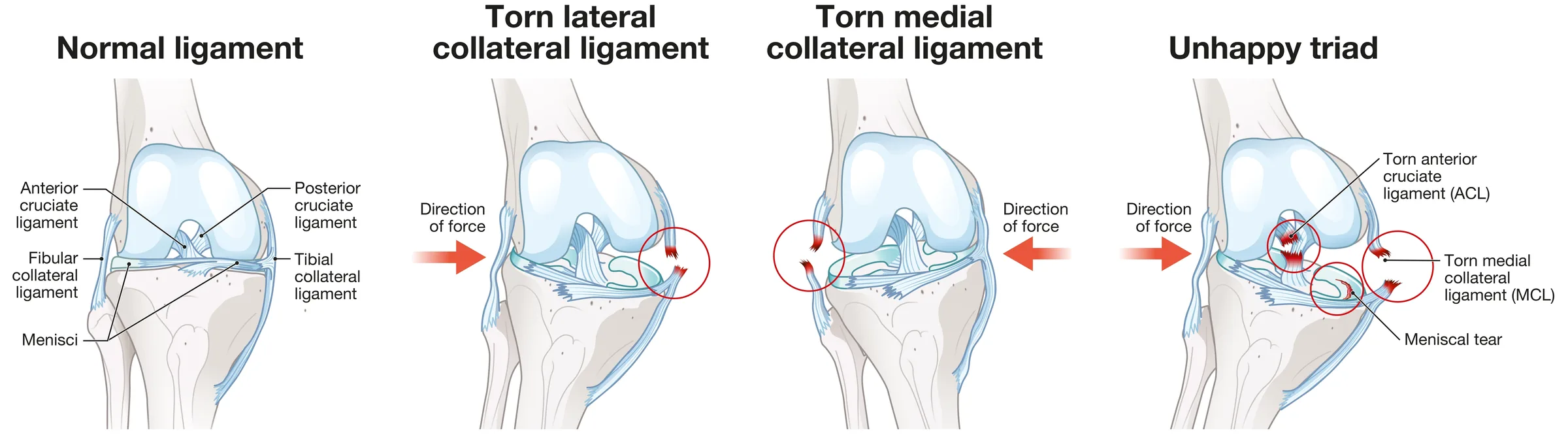
The posterior cruciate ligament (PCL) is the strongest ligament in the knee — a robust band of tissue running diagonally through the centre of the joint, connecting the femur to the tibia and preventing the tibia from sliding backwards. The PCL is the primary restraint to posterior tibial translation, working in concert with the ACL to provide rotational and multi-directional knee stability. While less common than ACL tears, PCL injuries account for approximately 20% of all knee ligament injuries and are among the most complex and frequently under-diagnosed conditions in sports surgery Dubai. An experienced ACL PCL surgeon is essential to correctly grade the injury and determine the optimal management pathway.

"PCL injuries are often underestimated. A thorough clinical assessment and a surgeon experienced in both ACL and PCL reconstruction are essential to correctly identify the injury grade and any combined ligament involvement — and to choose the right treatment path."
— Dr. Mohammad Ashfaq Konchwalla, FRCS

Dr. Mohammad Ashfaq Konchwalla is a British-trained FRCS-certified orthopaedic and sports surgeon with over 2,000 knee ligament procedures to his name — an experienced ACL PCL surgeon in Dubai who assesses and treats the full spectrum of PCL injuries, from isolated Grade I partial tears managed conservatively, to complex Grade III complete PCL ruptures and multiligament knee injuries requiring sophisticated staged surgical reconstruction. His comprehensive approach addresses not just the PCL in isolation, but every associated ligament, meniscus, and cartilage injury — giving patients the best possible chance of full recovery and return to sport.

PCL tears most commonly result from a direct blow to the front of a bent knee — the classic "dashboard injury" in road traffic accidents, or a direct tackle in contact sports. The posterior tibial sag and characteristic clinical signs (Posterior Drawer Test, Quadriceps Active Test) allow accurate bedside diagnosis, confirmed by MRI. Unlike ACL tears, many isolated Grade I and II PCL injuries can be managed successfully without surgery through quadriceps-focused physiotherapy — making accurate grading by an expert PCL surgeon in Dubai critical to appropriate care.
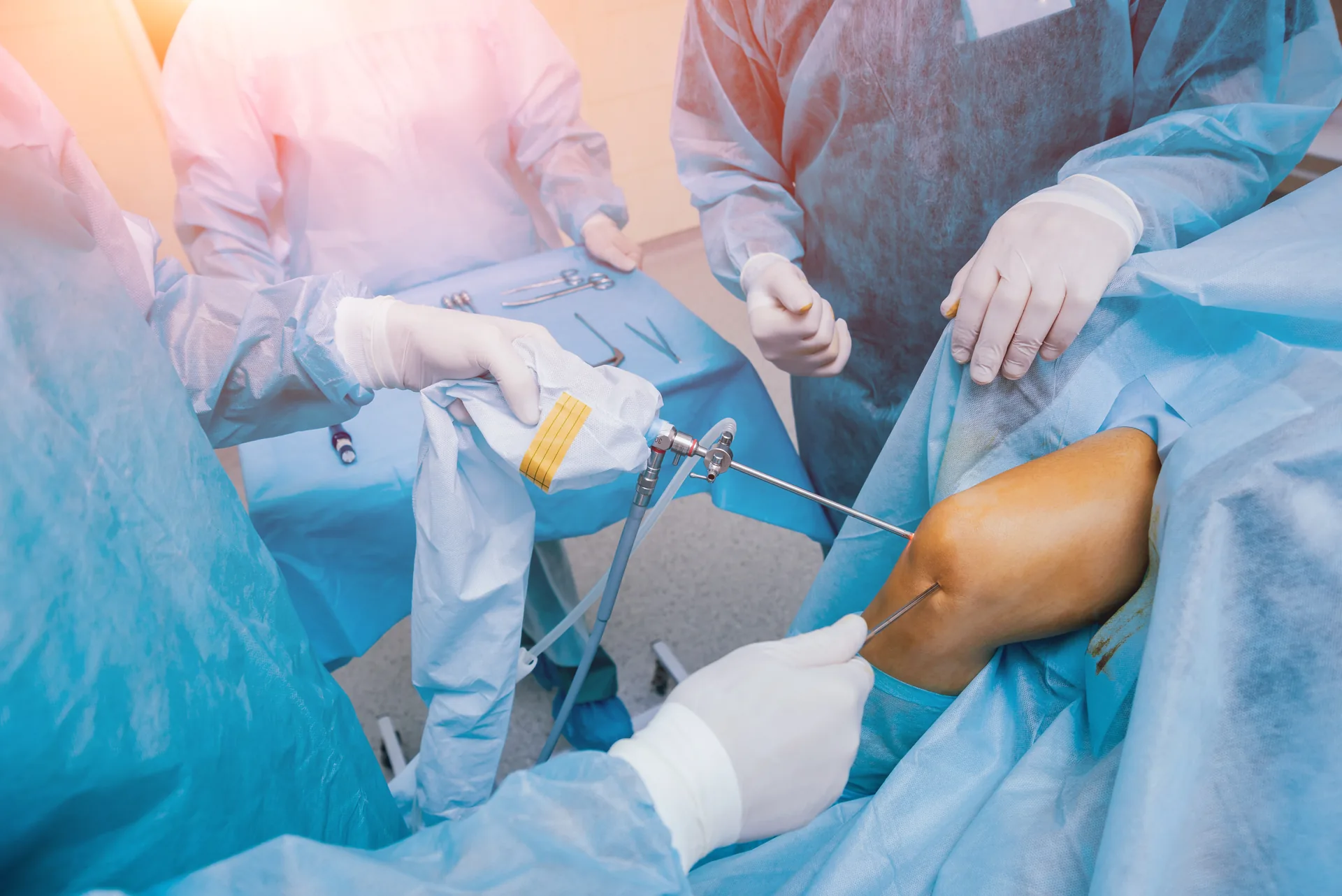
PCL Surgery Dubai — Dr. Konchwalla, ACL PCL Surgeon at Medcare Hospital
Procedure Type
PCL Reconstruction (Arthroscopic / Open)
Technique depends on grade and combined injuries.
Duration
1 – 3 Hours
Longer for combined multiligament reconstruction.
Anaesthesia
General or Spinal
With regional nerve block for pain control.
Hospital Stay
Same Day to 2 Nights
Depends on complexity and combined procedures.
Return to Sport
9 – 12 Months
Criterion-based, not calendar alone.
Consultant Surgeon
Dr. Mohammad Ashfaq Konchwalla
FRCS (Eng) · FRCS (Glas) · FRCS (Tr & Ortho) — ACL PCL Surgeon trained at King's College London
Location
Medcare Hospital Dubai
22A Street, from Sheikh Zayed Road, 2nd Interchange, Dubai UAE
Book a Consultation
Appointments typically available within 48 hours
Recognising a PCL Injury

Symptoms of a PCL Tear

Pain centred at the back of the knee following a direct blow — typically to the front of the tibia with the knee bent. Unlike ACL injuries, there is often no audible pop, and many patients are able to continue walking, which can lead to delayed diagnosis.
Moderate knee swelling typically develops within 24 hours. PCL tears generally cause less dramatic swelling than ACL tears because the PCL lies outside the main joint cavity — making the injury easier to miss acutely.
With the knee bent at 90°, the tibia drops posteriorly relative to the femur — the classic "sag sign" of PCL deficiency. This is pathognomonic of a complete PCL tear and is detected clinically by Dr. Konchwalla at examination.
A feeling of the knee giving way, particularly when descending stairs, walking on slopes, or decelerating during sport. PCL deficiency characteristically causes instability with posterior loading — activities that stress the back of the knee joint.
Not every PCL tear requires surgery. Grade I and Grade II tears often respond to physiotherapy with quadriceps strengthening, functional bracing, and activity modification. Surgical reconstruction is recommended for: Grade III complete PCL tears; PCL tears combined with ACL, LCL, MCL, or posterolateral corner injuries; failed conservative management; and athletes who require full knee stability for return to high-demand sport. Dr. Konchwalla assesses each patient individually and always explores non-surgical options first.
Benefits

Why Choose PCL Reconstruction?

PCL reconstruction eliminates the posterior tibial sag and giving-way that prevent confident sport, stair-climbing, and deceleration — fully restoring the posterior restraint the knee requires for all high-demand activities.
Chronic PCL deficiency causes abnormal loading on the medial compartment and patellofemoral joint, accelerating cartilage wear and early-onset arthritis. Reconstruction normalises joint mechanics and protects long-term knee health.
PCL tears frequently involve concurrent ACL, MCL, LCL, or posterolateral corner injuries. Dr. Konchwalla's expertise as an ACL PCL surgeon ensures every associated injury is identified and addressed — preventing the failure and ongoing instability that results from incomplete reconstruction.
Not every PCL tear needs surgery. Dr. Konchwalla always explores physiotherapy, functional bracing, and quadriceps rehabilitation before recommending surgical intervention — ensuring surgery is only performed when it offers a clear benefit over conservative care.
PCL Injury Patterns

Conditions Treated with PCL Surgery

PCL injuries range from partial tears managed conservatively to severe multiligament knee dislocations requiring urgent surgical planning. Select a condition below to learn how Dr. Konchwalla approaches each injury pattern.

Grade I & II Partial PCL Tears

Grade I and Grade II PCL tears involve partial disruption of the ligament with <10mm of posterior tibial translation compared to the uninjured side. These injuries typically result from lower-energy mechanisms and — crucially — the PCL retains continuity, allowing healing with appropriate conservative management. Dr. Konchwalla recommends a structured programme of quadriceps strengthening, functional bracing, and sport-specific rehabilitation. The quadriceps is the primary dynamic stabiliser compensating for PCL deficiency — its rehabilitation is the cornerstone of non-surgical PCL injury treatment in Dubai. The majority of Grade I and II tears achieve good functional outcomes without surgery.
At a Glance
Translation
<10mm posterior shift
Treatment
Physiotherapy & bracing
Key rehab focus
Quadriceps strengthening
Return to sport
3–6 months

Grade III Complete PCL Tear

A Grade III complete PCL tear involves >10mm of posterior tibial translation — signifying complete ligament rupture with gross knee instability. These injuries are commonly associated with higher-energy trauma and often involve concurrent damage to the posterolateral corner, ACL, or medial ligament complex. Isolated Grade III PCL tears in active patients, athletes, and those with failed conservative management are the primary indication for PCL reconstruction surgery in Dubai. Dr. Konchwalla performs arthroscopic-assisted PCL reconstruction using a carefully selected graft, precisely replicating the anatomical footprint of the native PCL to restore posterior stability and enable return to full sport.
At a Glance
Translation
>10mm — complete rupture
Surgical indication
Active patients & athletes
Technique
Arthroscopic reconstruction
Return to sport
9–12 months

Combined ACL & PCL Injury

Combined ACL and PCL tears represent a severe bicruciate ligament injury — typically occurring from high-energy sporting trauma, road traffic accidents, or hyperextension forces. The knee is profoundly unstable in both anterior and posterior planes. As a dedicated ACL PCL surgeon, Dr. Konchwalla has the expertise to plan and execute both cruciate ligament reconstructions — either simultaneously or in a staged approach — restoring complete knee stability. Pre-operative MRI, CT where needed, and vascular assessment are essential before proceeding. Staged reconstruction is sometimes preferred to allow swelling to resolve and to optimise range of motion before the second procedure.
At a Glance
Instability
Anterior & posterior combined
Approach
Simultaneous or staged
Specialist
ACL PCL surgeon required
Recovery
12–18 months

PCL & Posterolateral Corner Injury

The posterolateral corner (PLC) — comprising the fibular collateral ligament, popliteus tendon, and popliteofibular ligament — is frequently torn alongside the PCL in high-energy knee injuries. This combined PCL-PLC injury produces complex posterolateral rotatory instability, with varus and external rotation laxity in addition to posterior sag. These injuries are among the most technically demanding in orthopaedic surgery and are a leading cause of PCL reconstruction failure if the PLC is not addressed simultaneously. Dr. Konchwalla's expertise in posterolateral corner reconstruction ensures all planes of instability are corrected in a single comprehensive procedure.
At a Glance
Instability pattern
Posterior + posterolateral
PLC structures
FCL, popliteus, PFL
Approach
Combined PCL + PLC reconstruction
Failure risk
High if PLC untreated

Knee Dislocation & Multiligament Reconstruction

Knee dislocations are orthopaedic emergencies — involving disruption of three or more knee ligaments and a high risk of concurrent popliteal artery and peroneal nerve injury. Immediate vascular assessment is mandatory. Once the neurovascular status is confirmed, comprehensive multiligament reconstruction planning begins — addressing the PCL, ACL, and any MCL or PLC involvement. Dr. Konchwalla's specialist experience in multiligament knee reconstruction encompasses the full complexity of these injuries — from acute assessment and staged surgical planning through to the structured rehabilitation required to restore knee function after catastrophic ligament disruption.
At a Glance
Priority
Immediate vascular assessment
Ligaments
3+ structures involved
Approach
Staged multiligament reconstruction
Recovery
12–24 months
Surgical Technique

Choosing the Right PCL Treatment

Treatment of a PCL tear is tailored to the injury grade, the presence of combined ligament injuries, the patient's activity level, and their goals. As an experienced ACL PCL surgeon in Dubai, Dr. Konchwalla offers the full range of surgical and non-surgical management options and will advise the most appropriate approach at consultation.

Grade I & II Tears · First-Line Treatment

Physiotherapy & Functional Bracing

Partial PCL tears (Grade I and II) with less than 10mm of posterior tibial translation are initially managed conservatively. The programme centres on progressive quadriceps strengthening — the primary dynamic restraint compensating for PCL deficiency — alongside functional bracing, proprioception training, and sport-specific conditioning. Dr. Konchwalla's conservative pathway is structured, evidence-based, and results in good functional outcomes for the majority of partial PCL tears. Return to sport is typically achievable in 3–6 months, subject to clinical and functional testing.
Most Commonly Used Autograft

Hamstring Tendon Graft (Semitendinosus & Gracilis)

The hamstring tendon graft — harvested from the semitendinosus and gracilis tendons through a small incision — is the most frequently used autograft for PCL reconstruction. It produces a strong, multi-stranded graft with excellent biomechanical properties and lower donor-site morbidity compared to patellar tendon harvest. Particularly suited to patients who require a large-diameter graft for PCL reconstruction, and those in whom quadriceps strength preservation is important. The preferred choice for most isolated Grade III PCL reconstructions.
Highest Initial Stiffness

Patellar Tendon Graft (Bone-Patellar Tendon-Bone)

The patellar tendon graft — harvested as a central third strip with a bone plug at each end — provides the highest initial graft stiffness and fastest bone-to-bone tunnel incorporation. The bone-to-bone fixation makes it particularly suited to high-demand athletes requiring maximal early graft strength, and to cases where secure fixation is critical. It is used selectively in PCL reconstruction and is particularly valuable in revision cases and high-demand pivoting athletes.
Multiligament & Complex Cases

Allograft (Donor Tendon — Achilles or Tibialis)

Cadaveric allograft tissue — typically Achilles tendon or tibialis anterior — is used in PCL reconstruction when multiple graft sources are required simultaneously, such as combined ACL-PCL-PLC reconstructions in multiligament knee injuries. Allograft avoids donor-site morbidity when autograft is insufficient, and allows large-diameter grafts for PCL reconstruction. Incorporation is slightly slower than autograft. It is the graft of choice for complex multiligament reconstructions requiring multiple tissue sources.
The Procedure

How PCL Reconstruction Works

Every PCL reconstruction at Medcare Hospital Dubai follows a precise surgical protocol tailored to the patient's injury grade, combined ligament involvement, and graft selection. Click any step to expand details.

01

Diagnosis & Pre-Op Planning

Before Surgery

Clinical examination (Posterior Drawer Test, Quadriceps Active Test, Sag Sign, Dial Test for PLC). MRI confirms PCL tear, grades the injury, and identifies concurrent ligament, meniscus, and cartilage damage. Vascular assessment if dislocation suspected. Pre-operative physiotherapy optimises quadriceps before surgery.

Posterior Drawer TestMRI ScanInjury GradingPre-Op Physio
Location
Medcare Hospital
Pre-Op Physio
4–8 weeks
Imaging
MRI ± CT ± Vascular
02

Anaesthesia & Positioning

Day of Surgery

General or spinal anaesthesia with peripheral nerve block. Patient positioned to allow both arthroscopic portals and, if needed, a posteromedial approach. Thorough joint assessment under anaesthesia confirms laxity patterns. Combined ligament injuries are addressed in the planned sequence.

General or SpinalNerve BlockEUA Laxity Assessment
Type
General / Spinal
Pain Block
Peripheral Nerve
Approach
Arthroscopic ± Open
03

Arthroscopy & Graft Harvest

Core Procedure

Arthroscope introduced to confirm PCL rupture, assess both menisci, articular cartilage, and ACL. Any concurrent meniscus tears repaired. Graft harvested through a separate incision — hamstring, patellar tendon, or allograft prepared on the back table to the required diameter and length.

Joint AssessmentMeniscus CheckGraft Harvest
Portals
2–3 small
Graft Source
Hamstring / PTG / Allograft
Meniscus
Repaired if torn
04

Tunnel Drilling & Graft Passage

Reconstruction

Tibial and femoral tunnels drilled to precisely replicate the native PCL footprint under arthroscopic and fluoroscopic guidance. The tibial inlay technique may be used to avoid the "killer turn" of graft abrasion. Graft passed and tensioned in the correct anatomical position. Posterior capsule protected throughout.

Tunnel DrillingInlay or TranstibialAnatomical Placement
Guidance
Arthroscopic + Fluoro
Technique
Inlay or Transtibial
Protection
Neurovascular structures
05

Fixation & Combined Ligament Repair

Fixation

Graft secured with interference screws or cortical buttons at both tibial and femoral ends. If combined ACL, MCL, or PLC injuries are present, these are addressed in the planned sequence during the same anaesthetic. Stability confirmed arthroscopically through full range of motion.

Graft FixationCombined Ligament RepairStability Check
Fixation
Screws / Buttons
Combined
ACL / MCL / PLC if needed
Total Time
1–3 hours
06

Recovery & Discharge

Post-Op

Patients are fitted with a hinged knee brace locked in extension and provided with crutches before discharge. Written aftercare instructions, home exercise programme, and physiotherapy referrals arranged before leaving Medcare Hospital. Neurovascular checks performed before discharge.

Hinged Brace (6 wks)CrutchesHome ExercisesPhysio Referral
Stay
Day Case / 1–2 Nights
Aid
Brace + Crutches
Follow-up
Within 2 weeks
1–3h
Procedure
2,000+
Ligament Procedures
Same Day
Discharge (Isolated)
9–12 Mo
Return to Sport
Book Consultation
Recovery & Rehabilitation

Your PCL Surgery Recovery Timeline

PCL rehabilitation is a structured, criterion-based process with a strong emphasis on quadriceps strengthening as the primary dynamic stabiliser of the PCL-reconstructed knee. The brace is worn for 6 weeks to protect graft healing. Progress is guided by strength and functional milestones — not the calendar alone.

9–12
Months to Sport
Weeks 1–6
01

Brace & Swelling Control

Hinged brace locked in extension. Crutches for mobility. Ice and elevation. Gentle range-of-motion exercises and quadriceps activation from day one. No hamstring loading — protects graft fixation.
Weeks 6–12
02

Early Strengthening

Brace discontinued. Full range of motion restored. Progressive closed-chain quadriceps strengthening — leg press, squats, step-ups. Stationary cycling. Crutches weaned.
Months 3–5
03

Neuromuscular Control

Balance and proprioception training. Progressive resistance and power exercises. Swimming and pool running. Return to driving and gym training. Gradual hamstring loading introduced.
Months 5–7
04

Running & Sport-Specific Training

Jogging programme introduced when quad symmetry ≥70%. Progressive running volume and speed. Agility drills. Sport-specific skill and conditioning training begins.
Months 7–9
05

Advanced Training & Testing

Full training intensity. Pivoting, cutting, contact preparation. Isokinetic strength testing and hop tests. Return-to-sport readiness assessment — strength symmetry ≥90%.
Months 9–12
06

Return to Competitive Sport

Clearance when limb symmetry ≥90%, hop tests passed, and psychological readiness confirmed. Dr. Konchwalla reviews at 6 weeks, 3, 6, and 12 months post-surgery.
Your Surgeon
Why Dr. Konchwalla?

British-trained. FRCS-certified. Dubai's specialist ACL PCL surgeon — trusted by athletes and active patients across the UAE and beyond.

Qualifications
FRCS (Eng) · FRCS (Glas) · FRCS (Tr & Ortho)
Trained at King's College London and leading UK surgical institutions.
ACL PCL Experience
2,000+ knee ligament procedures — including isolated PCL, combined ACL-PCL, PCL-PLC, and complex multiligament knee reconstructions.
Comprehensive Assessment
Not just the PCL — identifying and treating every associated ligament, meniscus, and cartilage injury to prevent incomplete reconstruction and re-injury.
Conservative First
Dr. Konchwalla always explores physiotherapy, bracing, and quadriceps rehabilitation before recommending surgical intervention where appropriate.
Personalised Rehab
Custom rehabilitation built around your sport, your level, and your specific goals — with criterion-based return-to-sport protocols.
Sport-Specific PCL Care

PCL Surgery for Athletes

The PCL is most commonly injured in high-contact sports and high-energy mechanisms. Dr. Konchwalla tailors both the surgical approach and rehabilitation to each athlete's specific sport demands.

🏈

Contact Sports

Football, rugby, American football. Direct blow to anterior tibia — tackles, falls on bent knee. Combined PCL-PLC injuries common from high-energy contact.
🏍️

Motorsport & Road Injuries

Dashboard injury — classic mechanism. High-energy anterior tibial impact in RTA. Commonly associated with multiligament tears and vascular injury risk.
⛷️

Skiing & Snow Sports

Hyperflexion and hyperextension forces. Falls on bent knee with posterior force. Often combined with MCL or ACL injury in ski binding accidents.
🥋

Martial Arts & Combat

Hyperextension and direct impact mechanisms. Falls onto bent knee, sweep techniques, and grappling forces. Multiligament involvement common.
FAQs

Frequently Asked Questions

Common questions about PCL surgery in Dubai — answered by Dr. Konchwalla's team at Dubai Sports Surgery.

Full recovery from PCL reconstruction takes 9–12 months for safe return to competitive sport. Key milestones: brace for 6 weeks, physiotherapy from week one, walking normally at 6–8 weeks, jogging at 4–5 months, sport-specific training at 6–8 months, and competitive sport at 9–12 months. Return-to-sport clearance is based on strength and functional criteria — not the calendar.
No — not every PCL tear requires surgery. Isolated Grade I and Grade II tears often respond well to conservative management with structured physiotherapy and quadriceps strengthening. Surgery is recommended for Grade III complete PCL tears, combined ligament injuries (ACL-PCL, PCL-PLC), and cases where conservative treatment has failed. Dr. Konchwalla always explores non-surgical options first.
The ACL prevents the tibia from sliding forward, while the PCL prevents it from sliding backward. PCL tears are less common, more often caused by direct contact, and technically more demanding to reconstruct due to proximity to neurovascular structures. PCL rehabilitation focuses more heavily on quadriceps strengthening. Dr. Konchwalla is an expert ACL PCL surgeon and can manage both injuries and their combined presentations.
Grade I and II partial tears managed conservatively often achieve good outcomes. However, untreated Grade III PCL tears lead to progressive joint degeneration — particularly medial compartment and patellofemoral cartilage wear — causing chronic pain, stiffness, and early-onset arthritis. Early specialist assessment by an ACL PCL surgeon in Dubai is critical to prevent long-term joint damage.
Isolated PCL reconstruction may be performed as same-day or next-morning discharge at Medcare Hospital Dubai. Complex combined ligament procedures — PCL with ACL, posterolateral corner, or MCL — typically require one to two nights' admission for appropriate monitoring and pain management.
Hamstring tendon graft is the most commonly used autograft for PCL reconstruction — strong, large-diameter, and low donor-site morbidity. Patellar tendon graft offers the highest initial stiffness. Allograft (Achilles or tibialis) is used in multiligament cases requiring multiple graft sources. The optimal choice is made individually at consultation based on your age, sport, activity level, and anatomy.
Yes — return to competitive contact sport is the primary goal of PCL reconstruction in athletes. With expert surgery and structured rehabilitation, the majority of athletes achieve full return to their previous sport level at 9–12 months. Dr. Konchwalla uses objective strength and functional testing to clear athletes safely — not just time elapsed.
You should seek specialist assessment as soon as possible — ideally within 1–2 weeks of injury. Early assessment allows accurate grading, exclusion of combined injuries (especially PLC and vascular), and early initiation of quadriceps rehabilitation. Delayed diagnosis of combined PCL injuries is a leading cause of treatment failure. Contact Dubai Sports Surgery to book a consultation within 48 hours.
Dubai's ACL PCL Surgeon

Consult Dr. Ashfaq Konchwalla
Reclaim Your Peak

Book a consultation with Dubai's specialist ACL PCL surgeon — British-trained, FRCS-certified orthopaedic & sports surgery expert. Take the first step toward a full, confident recovery. Appointments available within 48 hours.

Location
Dubai, United Arab Emirates
Clinic Hours
Sunday – Thursday  9:00 – 17:00
Emergencies
Available on Request